
This is the time of year where we enter the flux, which can leave you scratcing your head and questioning your angling skills.
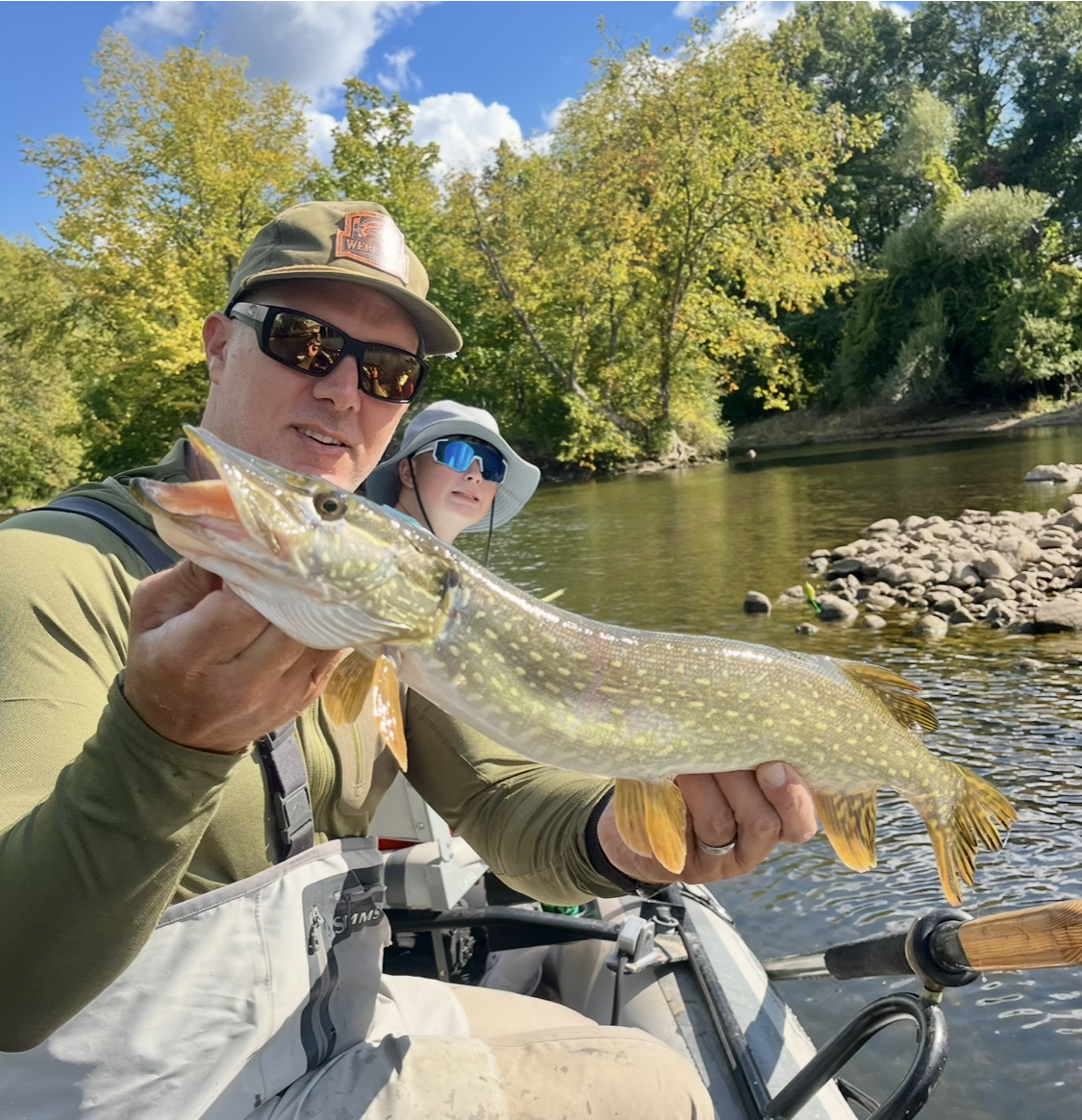
September is one of the most interesting months to fish the Grand River and its tributaries. Smallmouth bass remain a major target for us but we are focusing on northern pike as well.
The key right now is to follow the bait and pay attention to changing water conditions. Fish can move quickly this time of year and the locations that produced yesterday, may not produce the next day.
Smallmouth Bass
Smallmouth are transitioning from their late-summer patterns toward fall feeding behavior. As river temps drop, smallmouth are looking to put on the pounds before winter and the larger fish become increasingly more aggressive.
Right now we are throwing larger swimflies and crayflish patterns. The surface can still produce, so mix in your topwater flies as well. If fish aren’t responding to swimflies, start dredging the deeper runs with crayfish patterns on a sink-tip or multi-density line.
Northern Pike
September is when we really start paying more attention to pike. With water temps dropping, pike start feeding more aggressively.
The biggest clue to finding the pike, is again, finding the bait. Contiune to look for structure and dropoffs. Pike are ambush predators, so don’t simply look for the moving water. Pay attention to places where a pike can sit out of the current or in frog water.
For flies, go big and don't forget the bite guard.
Where We’d Start
Right now, we’re looking for three things: bait, current and structure.
For smallmouth, start with rock, gravel, wood and current seams. If those areas aren’t producing, move toward deeper water and look for fish holding near the edges of the current.
For pike, concentrate more heavily on weedlines, baitfish and slower-water areas. A weedline next to deeper water is a particularly attractive combination.
Don’t be afraid to move. Right now, fish can be spread out and covering water is often more productive than spending the entire day picking apart one piece of structure.
What We’re Watching
The biggest variable is water temperature and flow. A warm, stable stretch can keep the river fishing like late summer. A significant cold front or rain event can push the river toward a fall pattern very quickly.
Pay attention to water clarity and level after rain. A rising or dirty river can change the location and behavior of both bass and pike, while stable conditions can allow fish to settle into predictable holding water.
Bottom Line
Right now we're in transition but that transition is exactly what we like, as it brings out the bigger fish.
With the cooling water temps, both smallmpouth and northern pike are in fall-feeding mode. The best approach is to stay mobile, follow the bait and be willing to change depth and presentation as conditions change.
If you find the bait, there’s a very good chance you’ll find the fish.